
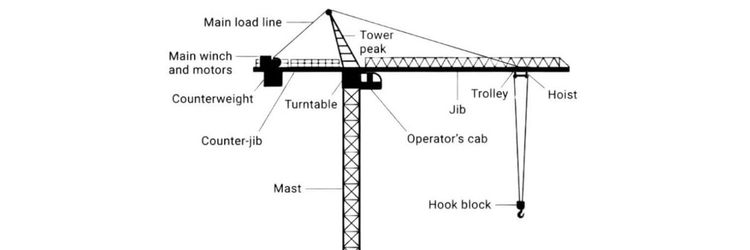
Tower cranes are one of the most important lifting machines on modern construction sites. In cities with active development such as Dubai and across the Middle East and Africa, tower cranes operate under heavy load conditions, frequent lifting cycles, and strict safety demands.
What makes a tower crane function so precisely is not just the structure itself, but the hoisting drive system hidden inside the machinery. This system is responsible for lifting and lowering loads smoothly, safely, and under control.
For crane operators, maintenance engineers, and equipment owners, understanding how the hoisting drive system works is important because it helps identify wear early, reduce downtime, and support safer operation.
The Job of the Hoisting Drive System
The hoisting drive system converts motor power into controlled lifting motion. It must manage torque, speed, load holding, and stopping behavior all at the same time.
A typical tower crane hoisting arrangement includes:
- Electric or hydraulic motor
- Industrial gearbox
- Hoisting drum
- Clutch system in certain designs
- Industrial brake system
- Wire rope and hook assembly
Each of these parts has a specific role, and all must work together correctly for the crane to lift loads safely and efficiently.
Why the Gearbox Is So Important
The gearbox is one of the most critical components in the hoisting drive line. Its main task is to reduce speed while increasing torque. That torque multiplication is what allows the crane to lift very heavy loads.
In simple terms, the motor may rotate quickly, but the hoisting drum must turn slowly and with much greater force. The gearbox makes that possible.
What the gearbox does
A tower crane gearbox typically:
- Converts high-speed motor rotation into usable lifting speed
- Increases torque for load lifting
- Helps ensure smooth hoist movement
- Protects the drivetrain from excessive stress
Most hoisting gearboxes use multi-stage reduction gearing so they can handle the heavy lifting requirements of construction work.
Common gearbox problems
Over time, gearboxes can develop:
- Gear wear or pitting
- Lubrication failure
- Overheating
- Bearing damage
- Excessive noise or vibration
These issues often start small, but if ignored they can lead to serious crane downtime.
How the Brake System Keeps the Load Safe
The brake system is the safety anchor of the hoisting drive. Its job is not just to stop movement, but to hold the suspended load securely when lifting stops.
In a tower crane, the brake must perform reliably every time the crane starts, stops, or pauses with a load in the air.
Main functions of crane brakes
Industrial brake systems in hoisting drives are designed to:
- Hold the load in position
- Control descent during lowering
- Provide emergency stopping capability
- Prevent reverse movement of the drum
Many tower cranes use fail-safe electromagnetic or hydraulic brakes that automatically engage if power is lost. This helps protect both the equipment and the people working around it.
Typical brake issues
Brake systems may suffer from:
- Lining wear
- Overheating
- Incorrect adjustment
- Hydraulic pressure loss
- Reduced holding force
Routine inspection is essential because brake performance is directly linked to crane safety.
Where Clutches Fit Into the System
Not every tower crane uses a clutch in exactly the same way, but in many designs the clutch is an important part of the drivetrain. It helps the system engage power more smoothly between the motor and gearbox.
The clutch makes it easier to transfer torque without sudden shock loads, which is important in a machine that repeatedly starts and stops while lifting heavy materials.
What the clutch does
Industrial clutches used in crane drive systems help:
- Engage the lifting drive smoothly
- Reduce impact on drivetrain components
- Protect the system from overload stress
- Support stable hoisting performance
Pneumatic clutches and friction-type clutches are common in heavy-duty crane applications because they can handle repeated cycles and high torque demand.
Signs of clutch wear
A worn clutch may show symptoms such as:
- Slipping during lifting
- Reduced lifting power
- Heat build-up in the clutch housing
- Irregular hoisting response
- Delayed engagement
If these signs appear, the clutch should be inspected before the problem spreads to other parts of the drive system.
Other Components That Matter
A tower crane hoisting system is more than just a gearbox, brake, and clutch. Several other components support the drivetrain and load movement.
Hoisting drum
The hoisting drum winds and unwinds the wire rope. It converts rotating motion into vertical lifting motion.
Wire rope system
The wire rope carries the lifting force from the drum to the hook and load. Its condition is critical to safe operation.
Couplings and drive shafts
These components connect the motor, gearbox, and other drive elements. They help transfer torque while allowing for alignment variation and vibration control.
If these parts are not properly aligned or maintained, the entire hoisting drive can become less efficient and more prone to wear.
Why Crane Drive System Maintenance Cannot Be Ignored
Tower cranes work under repeated load cycles and challenging construction conditions. That means the drivetrain is constantly under stress.
Without maintenance, the risk of failure increases over time.
Regular inspection helps:
- Reduce unexpected downtime
- Improve lifting safety
- Extend gearbox and brake life
- Detect wear before major failure
- Maintain efficient crane operation
For crane owners, maintenance is not only a technical issue — it is a cost control issue as well.
Common Maintenance Priorities
When maintaining tower crane hoisting systems, the main focus should be on:
- Gearbox lubrication and wear condition
- Brake adjustment and lining condition
- Clutch performance
- Shaft alignment
- Coupling condition
- Wire rope wear and drum condition
A simple inspection routine can prevent much larger repair costs later.
Supporting Tower Crane Drive System Maintenance
For construction companies and crane service teams, keeping tower cranes running often depends on getting the right spare parts at the right time. That is not always easy, especially when the machine is old or uses specific drivetrain components.
METAL Mobility supports crane operators and maintenance teams by helping with:
- Identification of drive system components
- Sourcing industrial clutches, brakes, couplings, and shafts
- Support for mechanical power transmission parts
- Logistics coordination for projects across the Middle East and Africa
Operating from Dubai as a regional base, this type of support can help reduce delays when crane drive components need to be replaced quickly.
Need Help With Crane Drive System Components?
If you need support for tower crane hoisting system components such as industrial clutches, brakes, couplings, gearboxes, or drivetrain parts, METAL Mobility can assist with sourcing and coordination.
 Email: sales@statusmobility.com
Tags: Tower Crane Hoisting System, Tower Crane Drive System Components, Tower Crane Gearbox Maintenance, Tower Crane Brake System Guide, Tower Crane Clutch Replacement, Crane Hoist Drive Components, Crane Gearbox Brake Clutch Explained, Tower Crane Maintenance Solutions, Construction Equipment Drive Systems, Tower Crane Spare Parts Middle East