
When a cardan shaft fails, accurate replacement becomes urgent. In industrial applications, downtime can be costly, especially in steel plants, cement plants, marine propulsion systems, mining operations, crane systems, and heavy construction equipment. The challenge is not only finding a replacement shaft — it is making sure the replacement is technically correct.
Many maintenance teams lose time because the shaft is measured incompletely, the flange details are missing, or the operating conditions are not properly understood. A cardan shaft may look simple, but the correct specification depends on several mechanical details that must match the machine.
This guide explains the key measurements and technical information needed to identify the right replacement cardan shaft for industrial equipment.
What a Cardan Shaft Does
A cardan shaft, also called a universal drive shaft or propeller shaft, transfers rotational power between two connected machines that are not perfectly aligned. This makes it essential in equipment where movement, offset, vibration, or installation constraints prevent direct rigid connection.
Cardan shafts are commonly used in:
- Steel mill drives
- Cement plant machinery
- Marine propulsion systems
- Mining equipment
- Cranes and hoisting systems
- Industrial gear drives
- Heavy construction machinery
Because these systems often operate under high torque and variable load conditions, the replacement shaft must be specified carefully.
Why Accurate Measurement Is So Important
A replacement shaft that is too short, too long, incorrectly mounted, or wrongly rated can create serious issues.
Incorrect specification may lead to:
- Vibration
- Early universal joint wear
- Gearbox or bearing damage
- Excessive noise
- Poor driveline efficiency
- Unexpected downtime
In heavy industry, a small measurement error can become a major mechanical problem. That is why the replacement process should be treated as a technical specification exercise, not just a part swap.
What You Need to Measure
To identify the correct cardan shaft, the following details are usually required.
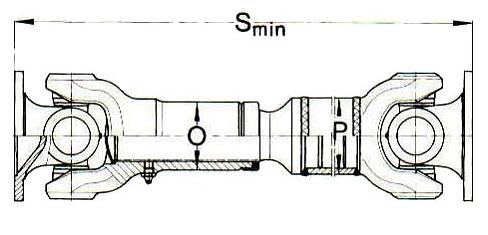
1. Overall Length or Flange-to-Flange Length
This is the most important measurement.
It is usually measured from one flange face to the opposite flange face while the equipment is in its normal operating position. Depending on the shaft type, this may also be called:
- Flange-to-flange length
- Installation length
- Overall shaft length
This dimension ensures the shaft fits properly without forcing the connected machinery out of alignment.
2. Flange Details
The shaft must connect correctly to the gearbox or driven equipment. For that reason, the flange dimensions must be known.
Key flange details include:
- Outer diameter
- Bolt circle diameter (PCD)
- Number of bolt holes
- Bolt hole diameter
- Flange thickness or connection style, if relevant
If the flange data is wrong, the new shaft may not mount correctly even if the length is correct.
3. Shaft Series or Joint Size
Cardan shafts are built in different series and sizes depending on torque and speed requirements. The universal joint size gives an important clue about the shaft’s capacity.
This information helps determine:
- Torque rating
- Maximum operating speed
- Overall strength of the shaft
- Likely replacement options
If the original shaft part number is available, that is often the fastest route to identification.
4. Operating Torque
The replacement shaft must be suitable for the actual load of the application.
Important factors include:
- Motor power
- Equipment duty cycle
- Load peaks during startup or braking
- Shock loads
- Continuous versus intermittent operation
A shaft used in a crusher or rolling mill may need a much higher torque capacity than a shaft used in lighter industrial service.
5. Operating Speed
Cardan shafts must also be suitable for the rotational speed of the application. Higher speed applications require proper balancing and the correct joint design.
If the speed rating is too low, the shaft may vibrate, overheat, or fail prematurely. That is why the shaft should always be matched to the real operating RPM, not just the machine nameplate.
6. Working Angle and Alignment
Cardan shafts are designed to work within a certain angular range. If the shaft operates beyond that range, the universal joints may wear out much faster.
Check:
- Horizontal offset
- Vertical offset
- Maximum working angle
- Whether the machine moves during operation
This is especially important on machines with vibration, changing load positions, or flexible mounting arrangements.
7. Sliding Length, If Applicable
Some shafts include a sliding spline section to allow movement between the connected machines.
For these shafts, you should know:
- Minimum compressed length
- Maximum extended length
- Available sliding travel
This helps ensure the shaft can accommodate movement without binding or damage.
Helpful Information to Send With the Request
Even if the basic measurements are available, extra information can help identify the correct shaft more quickly.
Useful supporting details include:
- Photos of the existing shaft
- Equipment make and model
- Gearbox manufacturer
- Existing shaft part number
- Application type
- Operating conditions
- Any visible damage or wear points
The more complete the information, the easier it is to match the right replacement.
Common Industries Where Replacement Shafts Are Needed
Replacement cardan shafts are frequently required in heavy-duty industries such as:
Used in rolling mills, cooling beds, and continuous production machinery.
Used in kiln drives, crushers, and conveyor systems.
Used in propulsion systems, marine gearboxes, and auxiliary drive arrangements.
Used in crushers, conveyors, and processing equipment.
Construction Equipment
Used in tower cranes, lifting equipment, and heavy machinery.
In all of these sectors, shaft failure can interrupt production, so accurate replacement is important.
A Practical Way to Specify the Correct Shaft
If you are preparing a replacement request, the simplest approach is to share:
- Shaft length
- Flange dimensions
- Shaft photos
- Equipment name and model
- Operating speed
- Torque or power information
- Application type
- Any existing shaft number or marking
This gives the supplier or engineer enough data to identify a suitable replacement more quickly.
How METAL Mobility Supports Replacement Projects
In many industrial environments, especially where equipment is older or the original shaft is no longer available, identifying the correct replacement can be difficult.
METAL Mobility Drive Systems supports maintenance teams and equipment operators by helping with:
- Cardan shaft specification review
- Replacement identification
- Technical matching support
- Sourcing of drivetrain components
- Logistics coordination across the Middle East and Africa
Based in Dubai, METAL Mobility can assist with project coordination and supply support for industrial drivetrain requirements.
Need Help Identifying a Replacement Cardan Shaft?
If you need help specifying or sourcing a replacement cardan shaft, share the available details with us:
- Shaft photos
- Length and flange measurements
- Equipment type
- Operating conditions
For technical support and sourcing assistance, contact:
 Email: sales@statusmobility.com
Tags: Cardan Shaft, Industrial Drive Shafts, Universal Joint Shafts, Cardan Shaft Maintenance, Cardan Shaft Replacement, Industrial Power Transmission, Heavy Machinery Drivetrain