
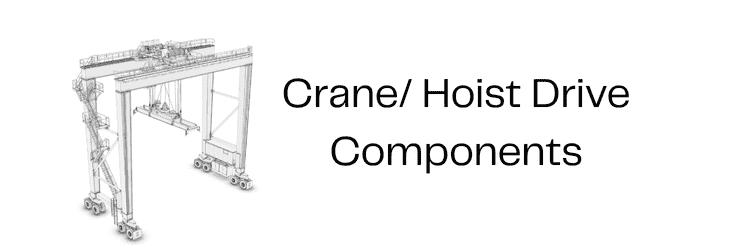
In many industrial sites across the Middle East, Africa, and global construction hubs like Dubai, cranes are still operating long after their original design life. It is not uncommon to find cranes running for 20, 30, or even 40 years.
While the structure of the crane may still be sound, the drive system tells a different story.
Over time, key components such as gearboxes, brakes, couplings, and shafts begin to lose efficiency. Breakdowns become more frequent, maintenance costs increase, and spare parts become harder to source. At this stage, operators face a critical decision:
➤ Replace the crane entirely
➤ Or upgrade the existing drive system
In most cases, retrofit solutions provide a more practical and cost-effective path.
What “Crane Drive Retrofit” Actually Means
A retrofit is not a full replacement. It is a targeted upgrade of critical drivetrain components to restore or improve performance.
Instead of removing the crane, retrofit focuses on:
- Replacing worn mechanical components
- Upgrading outdated technology
- Improving safety and control systems
- Adapting the drive system to current operating demands
This approach allows operators to extend crane life without major capital investment.
Why Crane Drive Systems Degrade Over Time
Even well-designed cranes face gradual performance decline due to operating conditions.
Common causes include:
- Continuous heavy load cycles
- Mechanical wear in rotating components
- Misalignment between drive elements
- Aging lubrication systems
- Environmental exposure (dust, heat, moisture)
- Outdated or obsolete components
Over time, these factors reduce efficiency and increase the risk of failure in the drivetrain.
When Is Retrofit the Right Decision?
Many operators delay action until a major failure occurs. However, retrofit should ideally be considered earlier.
Key Indicators That Retrofit Is Needed
- Repeated gearbox failures or overheating
- Reduced braking performance or unsafe stopping
- Increasing vibration or noise in the drive system
- Difficulty sourcing spare parts for older components
- Rising maintenance costs year after year
- Inconsistent lifting or travel performance
If multiple issues appear together, the crane is no longer operating efficiently — and retrofit becomes a strategic solution rather than a reactive repair.
High-Impact Components to Upgrade in Crane Retrofits
Not all components need replacement. A well-planned retrofit focuses on the parts that deliver the biggest improvement.
1. Gearboxes (Core of the Drive System)
Modern gearboxes offer:
- Higher torque capacity
- Improved efficiency
- Better sealing and lubrication
- Reduced maintenance requirements
Upgrading the gearbox often delivers the most noticeable improvement in crane performance.
2. Braking Systems (Safety-Critical Upgrade)
Older braking systems may not meet current safety expectations.
Upgrading to modern industrial brake systems improves:
- Load control
- Emergency stopping capability
- Operational safety
- Compliance with updated standards
3. Couplings and Shaft Systems (Hidden Problem Area)
Misalignment and worn couplings are a major source of vibration and drivetrain damage.
Replacing these components helps:
- Reduce vibration
- Protect gearboxes and motors
- Improve power transmission stability
4. Overload Protection and Torque Limiters
Older cranes often lack proper overload protection.
Modern systems help:
- Prevent drivetrain damage
- Protect expensive components
- Improve operational safety
Retrofit vs Replacement — A Practical Comparison
Factor | Retrofit | Full Replacement |
Cost | Lower | Very high |
Downtime | Minimal | Long |
Installation | Faster | Complex |
ROI | High | Long-term |
Flexibility | High | Limited |
➤ For most industrial operators, retrofit provides a faster and more economical solution.
Benefits of Retrofitting Crane Drive Equipment
A properly executed retrofit can transform crane performance without replacing the entire machine.
Key Benefits
- Extended crane service life (10–20 years)
- Improved reliability and reduced breakdowns
- Lower maintenance costs over time
- Better safety and control
- Reduced unplanned downtime
This makes retrofit especially valuable in industries where cranes are critical to operations.
Industries Where Crane Retrofits Are Common
Retrofit solutions are widely used in sectors where cranes operate continuously under heavy loads:
- Steel plants
- Cement plants
- Ports and shipyards
- Construction projects
- Oil and gas facilities
- Mining operations
- Manufacturing plants
In these industries, downtime directly impacts productivity, making drivetrain reliability essential.
How a Typical Crane Retrofit Project Is Executed
A structured approach ensures that retrofit delivers long-term results.
Step 1 — Inspection
Evaluate current condition of gearboxes, brakes, couplings, and shafts.
Step 2 — Engineering Review
Assess compatibility of new components with existing crane structure.
Step 3 — Component Selection
Choose suitable replacements based on torque, load, and operating conditions.
Step 4 — Planning & Installation
Schedule retrofit work to minimize operational disruption.
Step 5 — Testing & Commissioning
Verify performance, safety, and system stability.
Supporting Retrofit Projects in the Middle East & Africa
Many cranes operating across the Middle East and Africa were installed decades ago and continue to play a key role in industrial operations.
One of the biggest challenges in retrofit projects is:
➤ identifying compatible modern components for older systems
METAL Mobility Drive Systems supports crane operators and maintenance teams by helping:
- Identify suitable replacement components
- Source gearboxes, brakes, couplings, and shafts
- Coordinate supply for retrofit projects
- Reduce lead times through global sourcing
This support helps ensure retrofit projects are executed efficiently without long delays.
When Retrofit Is the Smarter Decision
If your crane structure is still sound but the drive system is causing:
- Repeated failures
- High maintenance cost
- Safety concerns
- Performance issues
➤ Retrofit is usually the smarter and faster solution compared to full replacement.
Need Support for Crane Drive Retrofit Solutions?
If your crane is facing gearbox issues, braking problems, or drivetrain instability, a retrofit solution may help restore performance and extend equipment life.
METAL Mobility can support with:
- Drivetrain component identification
- Retrofit planning support
- Sourcing of compatible equipment
- Coordination across Middle East and Africa
 Email: sales@statusmobility.com
Tags: Retrofit Crane Drive Systems, Tower Crane Maintenance, Crane Gearbox Replacement, Crane Brake Systems, Crane Drive Equipment Retrofit, Industrial Crane Maintenance, Crane Hoist System Components, Crane Drivetrain Solutions, Heavy Lifting Equipment Maintenance